
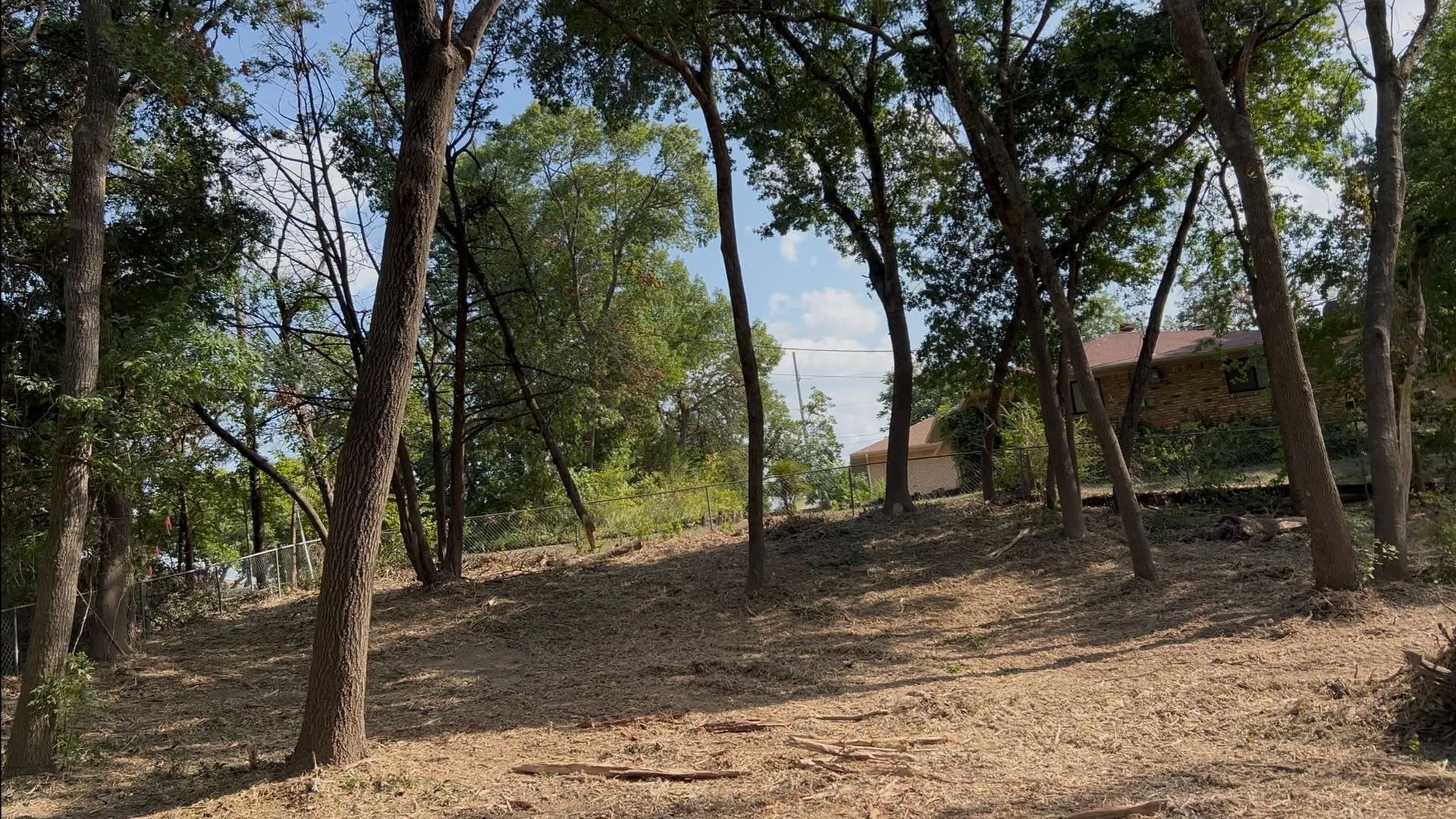
Properties Cleared Without Burning or Hauling
Forestry Mulching in Midlothian for properties overrun with cedar, mesquite, and brush
Ellis County properties often face encroachment from invasive cedar and mesquite that choke out pasture and trails, making land difficult to use or access safely. On-Scene Land Works mulches invasive trees and brush using a skid steer drum mulcher, grinding vegetation into mulch that remains on-site while preserving desirable mature trees. This approach eliminates the need for chainsaws, burning permits, or arranging debris removal, allowing property owners to reclaim overgrown acreage without the logistical burden of traditional clearing methods.
The drum mulcher grinds standing trees and dense brush into a layer of mulch left across the property, breaking down naturally to enrich the soil while preventing regrowth of invasive species. Larger native trees remain standing, maintaining canopy cover and protecting the soil from erosion. This selective process addresses the invasive pressure typical in North Texas without stripping the land bare or requiring multiple follow-up visits to haul debris.
Schedule a property evaluation to identify which trees should be mulched and which mature specimens will remain..
What Happens After the Mulching Process Completes
The skid steer drum mulcher processes invasive vegetation in a single pass, reducing cedar, mesquite, and brush to a uniform layer of mulch spread across the cleared area. The equipment handles material that would otherwise require chainsaw work, manual cutting, and coordination with hauling services, compressing weeks of traditional labor into a streamlined process. Native hardwoods and mature trees selected for retention remain untouched, providing immediate canopy cover once the invasive understory is removed.
Once the work finishes, you notice open sight lines where dense thickets previously blocked movement and visibility. Pasture becomes accessible for grazing or recreation, trails no longer require constant maintenance to cut back encroaching brush, and the mulch layer suppresses the rapid regrowth that typically follows traditional cutting. The mulched material decomposes over time, adding organic matter to the soil without the scorch marks or ash residue left by burning.
The process works best on properties where invasive species dominate the understory but mature trees provide value worth preserving. If your goal involves complete site preparation for construction or agriculture, mulching may be combined with additional grading or dirt work, but for land reclamation focused on usability and native tree retention, the drum mulcher handles the task without secondary cleanup requirements..
Questions Property Owners Ask Before Clearing Begins
Landowners across Ellis County face similar decisions when managing overgrown properties, and understanding how the drum mulcher process differs from traditional methods helps clarify what to expect.
What size trees can the drum mulcher handle?
The skid steer drum mulcher processes invasive cedar and mesquite typically ranging from seedlings to six-inch diameter trunks, grinding them into mulch without requiring chainsaw pre-cutting. Larger mature trees marked for retention remain standing and undamaged throughout the clearing process.
How does mulching compare to burning brush piles?
Mulching eliminates the need to obtain burn permits, wait for safe weather conditions, or manage active fires, and it leaves processed material distributed evenly across the property instead of concentrated in ash piles. The mulch layer also provides immediate erosion control and weed suppression that burned areas do not.
Why does cedar and mesquite grow so aggressively in Midlothian?
Ellis County's climate and soil conditions favor rapid cedar and mesquite expansion, particularly on pastures that have gone unused or lightly grazed for several years. Once established, these species spread quickly and outcompete native grasses and hardwoods without intervention.
What happens to the mulch left on the property after clearing?
The mulch decomposes naturally over the following months, enriching the soil and preventing the exposed ground from drying out or eroding during heavy rain. It also suppresses seed germination from invasive species, reducing the speed at which brush returns.
How soon can I use the land after mulching?
The property becomes accessible immediately once the equipment leaves, with no debris piles to remove or stumps to grind. Mulched areas support foot traffic, vehicle access, and livestock grazing as soon as the work finishes, unlike burned or cut-and-piled sites that require additional cleanup.
On-Scene Land Works operates throughout Midlothian, Waxahachie, and Red Oak, handling properties within a 50-mile radius from Midlothian where invasive species have reduced land usability. Request an on-site consultation to review which vegetation should be removed and which trees will remain standing.