
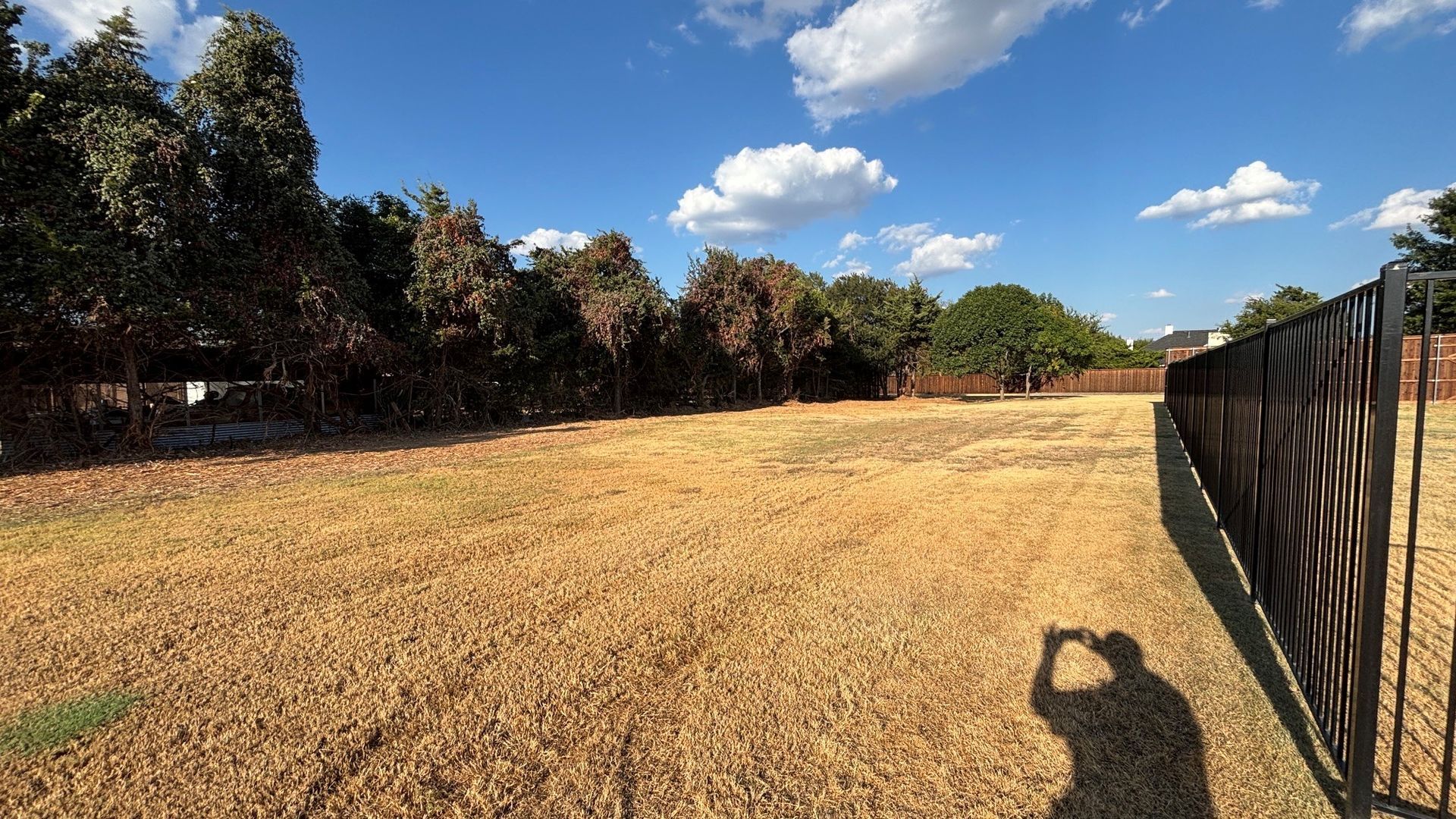
Acreage Reclaimed Without Debris Hauling
Land Clearing in Midlothian for pastures and acreage overtaken by cedar, mesquite, and invasive brush
Ellis County pastures often become choked with cedar, mesquite, and greenbrier that reduce usable acreage and block access to fences, water sources, and back sections of the property. On-Scene Land Works clears overgrown land by mulching invasive trees, brush, and encroaching vegetation using a skid steer drum mulcher, leaving the property ready for use without requiring burn permits or debris hauling. The service operates throughout Midlothian, Waxahachie, Red Oak, and Ennis, addressing properties within a 50-mile radius where invasive species have overtaken pastures and rendered land unusable for grazing or recreation.
The drum mulcher grinds invasive vegetation into mulch that remains on-site, enriching the soil as it decomposes and preventing erosion during heavy rain. Mature native trees stay standing, preserving canopy cover and soil stability while the invasive understory gets eliminated. This approach solves the logistical challenges of traditional land clearing, which requires coordinating chainsaw crews, arranging debris hauling, or obtaining burn permits and waiting for safe weather conditions to eliminate brush piles.
Request a detailed estimate based on your property's acreage and current vegetation density.
How Mulching Addresses Invasive Pressure
Land clearing involves distinguishing between vegetation that provides value and invasive species that degrade pasture productivity and wildlife habitat. The skid steer drum mulcher processes standing trees and dense brush in a single pass, grinding material that would otherwise require manual cutting, piling, and removal. On-Scene Land Works focuses on clearing larger acreage where invasive pressure has reduced land functionality, preserving mature oaks and other native hardwoods while removing cedar, mesquite, and brush that dominate the understory.
After clearing, you see open pasture where dense thickets previously blocked sight lines and restricted movement. Fencelines become accessible for repair, grazing areas expand to support livestock, and trails connect different sections of the property without requiring constant cutting to maintain access. The mulch layer left across the cleared acreage breaks down naturally, adding organic matter to the soil while suppressing the rapid regrowth of invasive seeds that would otherwise reclaim the land within a single growing season.
The service handles vegetation removal and does not include construction-grade grading, stump grinding for large trees, or installation of fencing or infrastructure. If your property requires leveling or dirt work after vegetation removal, those steps occur separately once the land is cleared and accessible.
Questions Before Starting Your Project
Clearing overgrown acreage involves practical decisions about process, timing, and what the property will look like once the work finishes.
How much does land clearing cost per acre in Texas?
Costs vary based on vegetation density, terrain accessibility, and the number of mature trees marked for retention, but equipment-based mulching typically costs less than traditional methods requiring debris hauling or multiple crews. Properties with moderate invasive pressure clear faster than acreage dominated by mature cedar thickets.
What's the most efficient land clearing method for my property?
Mulching works best for properties where invasive species dominate but mature trees provide value worth preserving. If your goal involves complete site preparation for construction, bulldozing may be more appropriate, but for pasture reclamation and land usability, mulching eliminates the need for burning or hauling while leaving the soil intact and protected.
Can the equipment work on sloped or uneven terrain?
The skid steer drum mulcher handles moderate slopes and uneven ground typical of Ellis County properties, though extremely steep terrain or areas with large rocks may limit access. Properties with significant elevation changes benefit from an on-site evaluation to determine which sections are accessible and which require alternative approaches.
What happens to the mulch over time?
The mulch decomposes gradually over six months to a year, depending on moisture and microbial activity in the soil. During decomposition, it retains soil moisture, prevents erosion, and suppresses weed seeds, eventually breaking down into organic matter that improves pasture soil structure and fertility.
How quickly does vegetation return after land clearing?
Mulching disrupts root systems and suppresses seed germination more effectively than cutting alone, but some invasive species may attempt to resprout from remaining root fragments. Properties that implement grazing or mowing after clearing experience significantly slower reinvasion compared to land left unmanaged, as ongoing disturbance prevents invasive seedlings from establishing.
On-Scene Land Works stores equipment in Midlothian and prioritizes larger land clearing projects across Ellis County. Call (469) 856-1876 to arrange an on-site consultation and discuss selective clearing tailored to your property's layout and vegetation conditions.